Understanding cognitive assessment results can feel overwhelming for families and school teams. Reports often include technical language and scores that are difficult to translate into meaningful support for students.
This Cognitive Abilities Overview was created by a bilingual school psychologist to bridge that gap.
This professionally designed guide explains key cognitive areas using the Cattell-Horn-Carroll (CHC) framework in a clear, practical, and family-friendly way.
What this guide includes:
• Clear explanations of major cognitive areas, including Crystallized Intelligence, Fluid Reasoning, Visual Processing, Processing Speed, Short-Term Memory, Long-Term Storage and Retrieval, Auditory Processing, and Attention
• Plain-language descriptions accessible to families
• Connections between cognitive skills and academic performance
• Interpretation considerations for English Learners and bilingual students
• Practical, school-based strategies to support learning
• A clean, consistent visual layout for easy reference during meetings
Intended audience:
School psychologists, educators, administrators, counselors, and families navigating the assessment process.
Important note:
This resource is for educational and informational purposes only and does not replace a comprehensive evaluation or professional judgment.
Understanding cognitive assessment results can feel overwhelming for families and school teams. Reports often include technical language and scores that are difficult to translate into meaningful support for students.
This Cognitive Abilities Overview was created by a bilingual school psychologist to bridge that gap.
This professionally designed guide explains key cognitive areas using the Cattell-Horn-Carroll (CHC) framework in a clear, practical, and family-friendly way.
What this guide includes:
• Clear explanations of major cognitive areas, including Crystallized Intelligence, Fluid Reasoning, Visual Processing, Processing Speed, Short-Term Memory, Long-Term Storage and Retrieval, Auditory Processing, and Attention
• Plain-language descriptions accessible to families
• Connections between cognitive skills and academic performance
• Interpretation considerations for English Learners and bilingual students
• Practical, school-based strategies to support learning
• A clean, consistent visual layout for easy reference during meetings
Intended audience:
School psychologists, educators, administrators, counselors, and families navigating the assessment process.
Important note:
This resource is for educational and informational purposes only and does not replace a comprehensive evaluation or professional judgment.
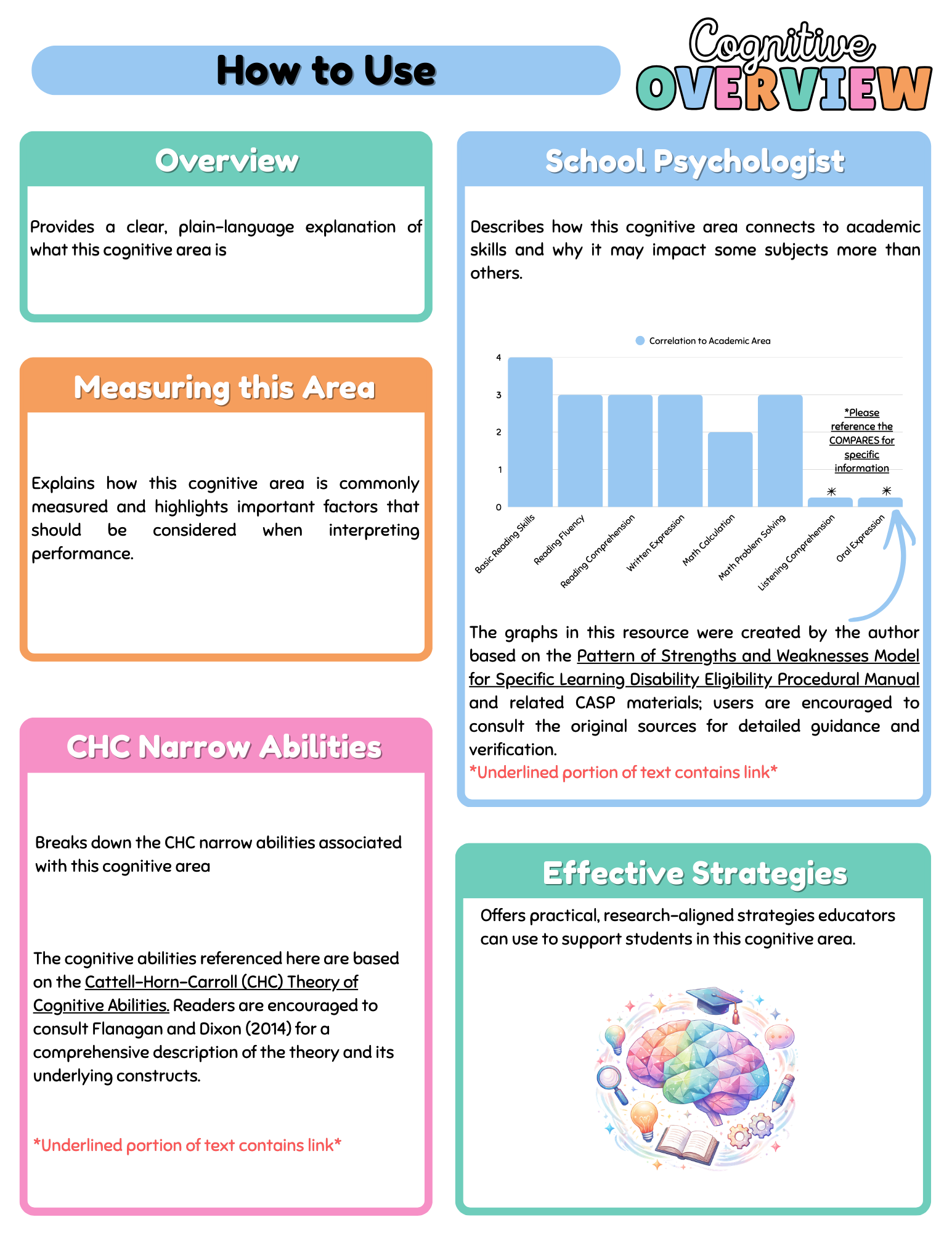 Image 1 of 9
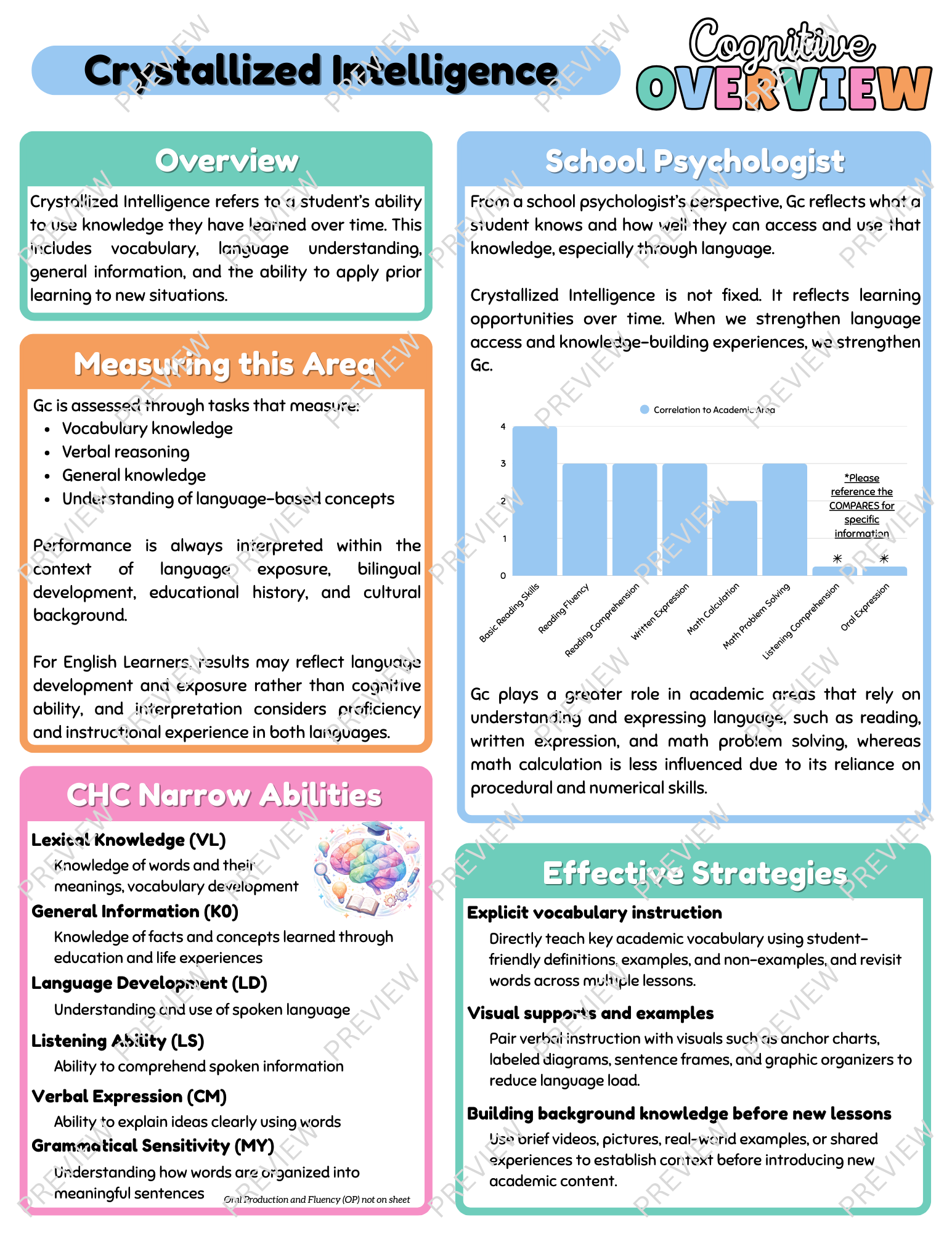 Image 2 of 9
 Image 3 of 9
 Image 4 of 9
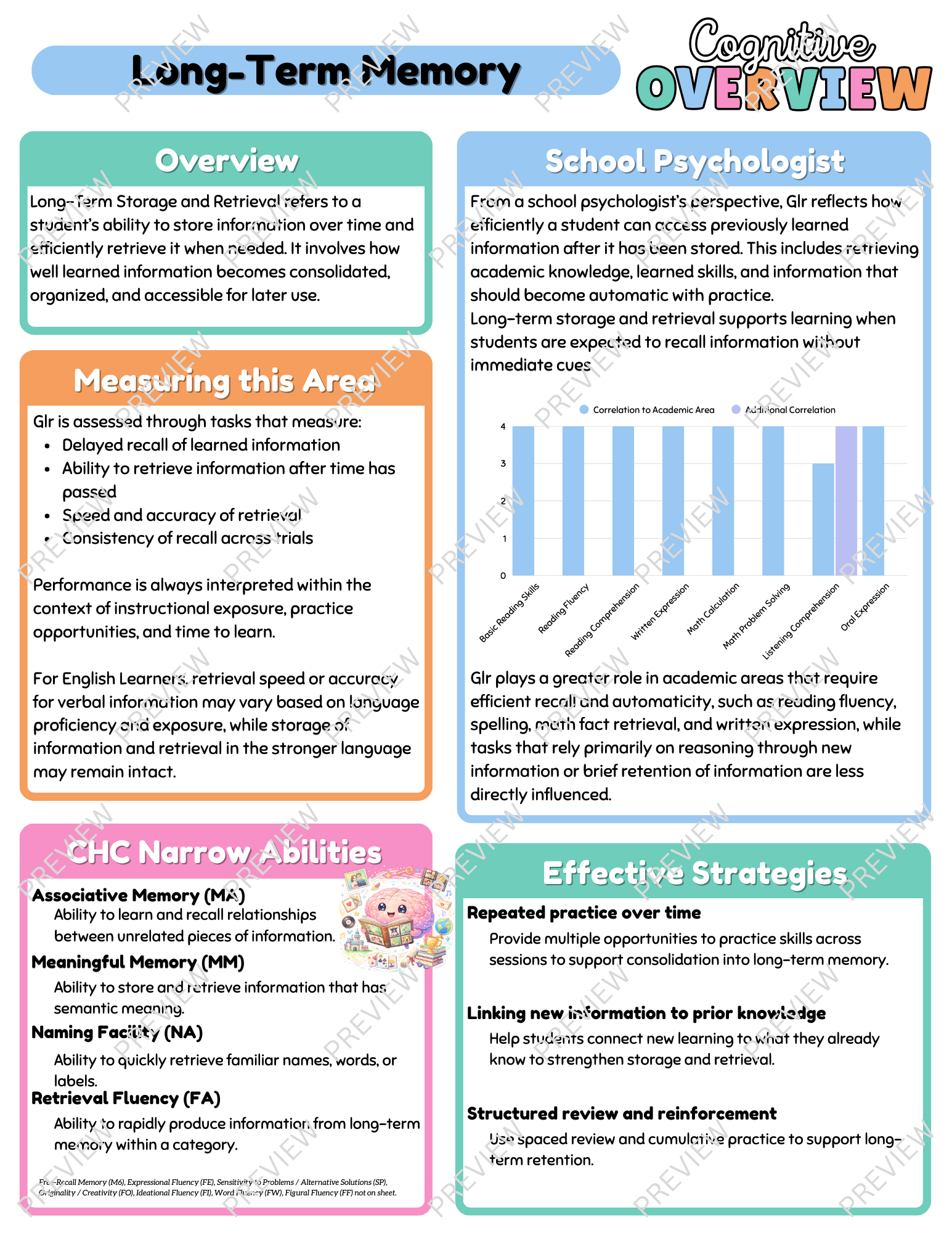 Image 5 of 9
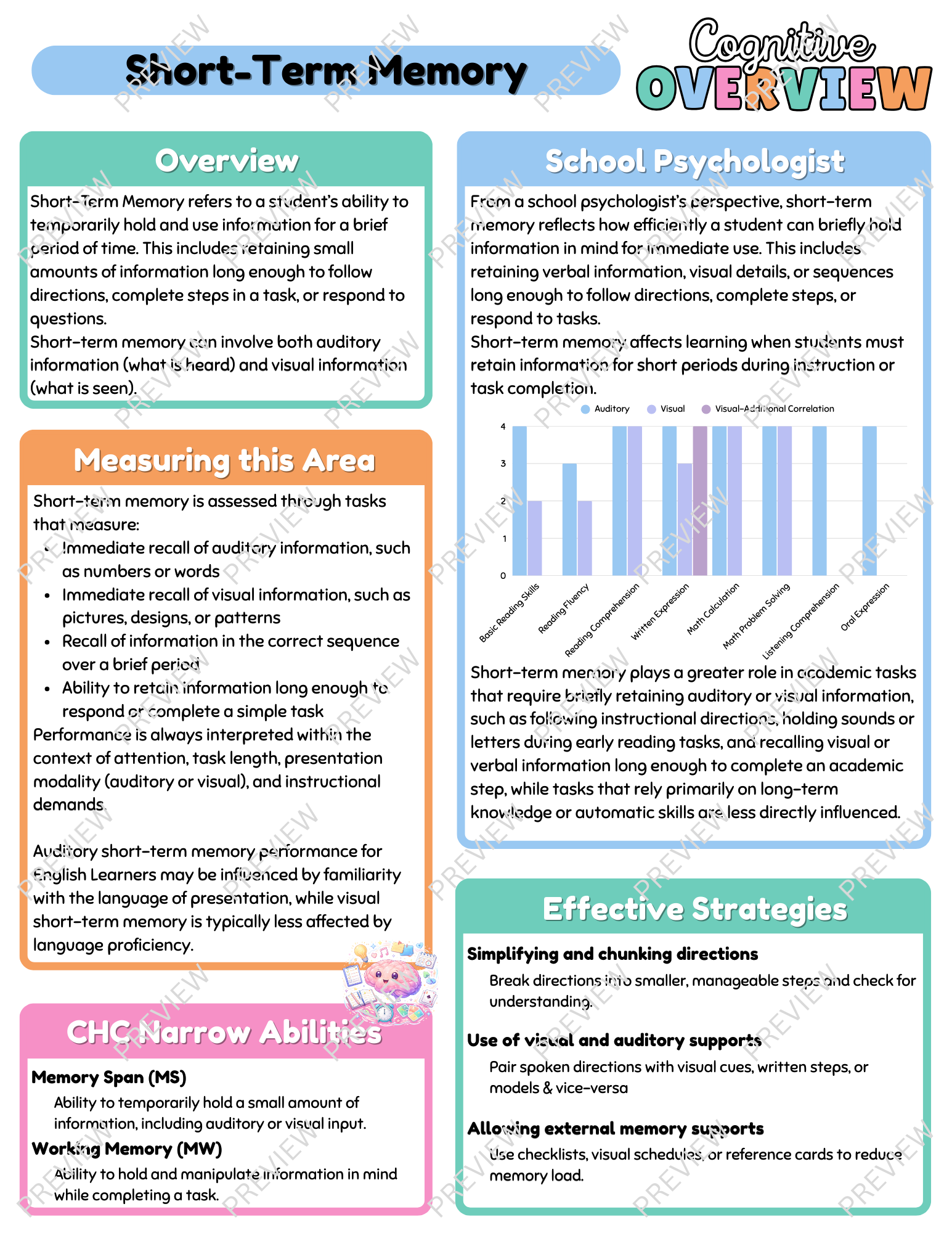 Image 6 of 9
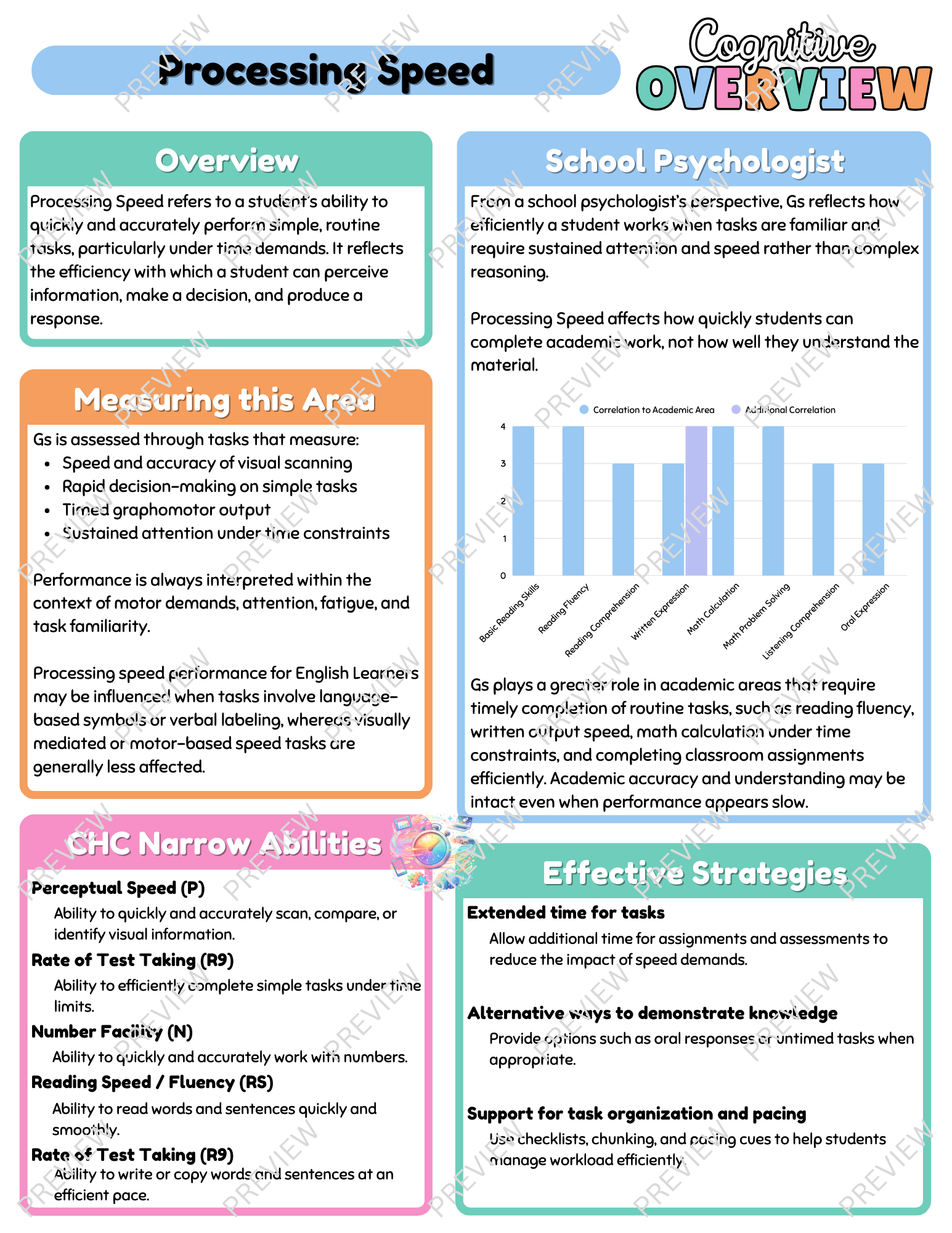 Image 7 of 9
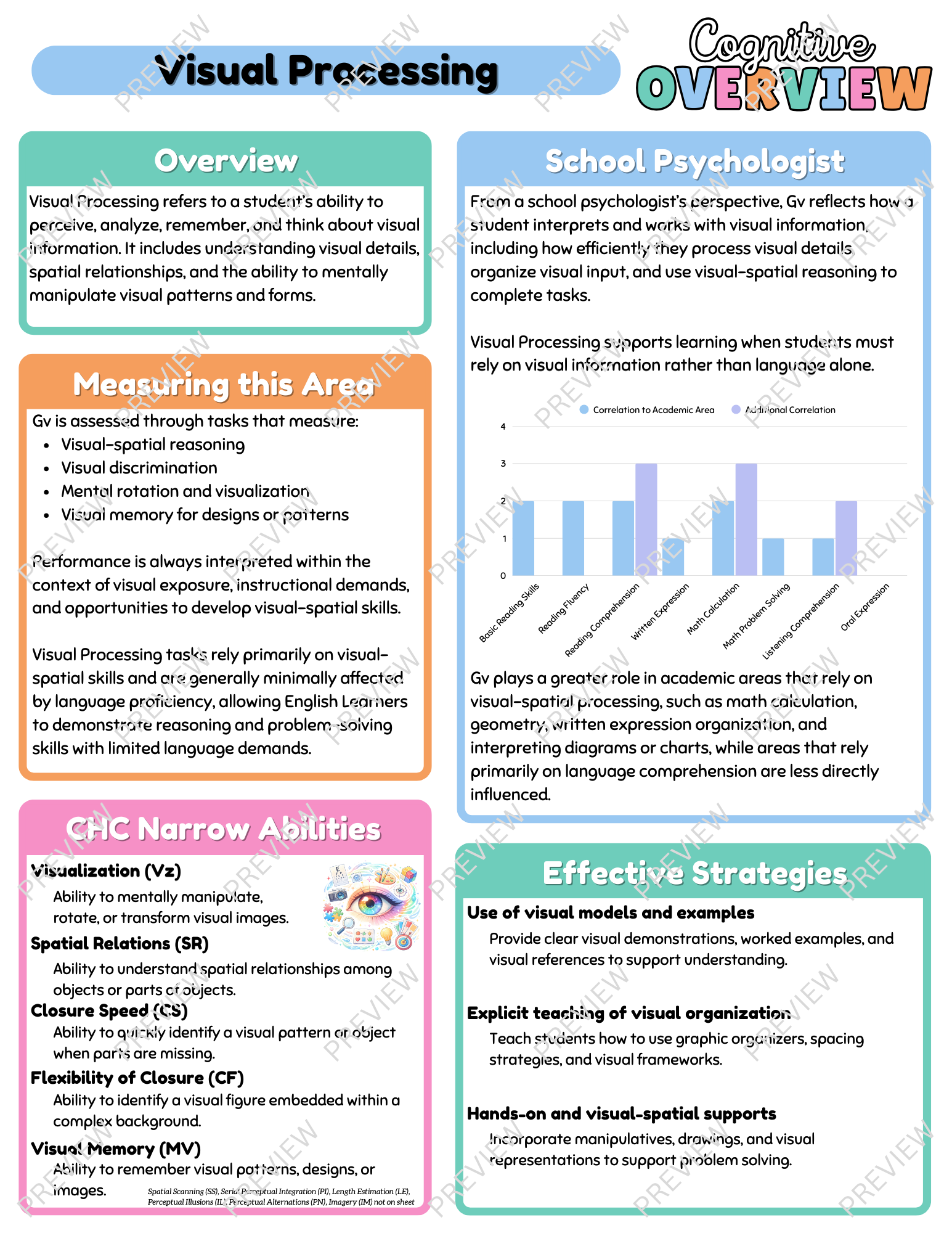 Image 8 of 9
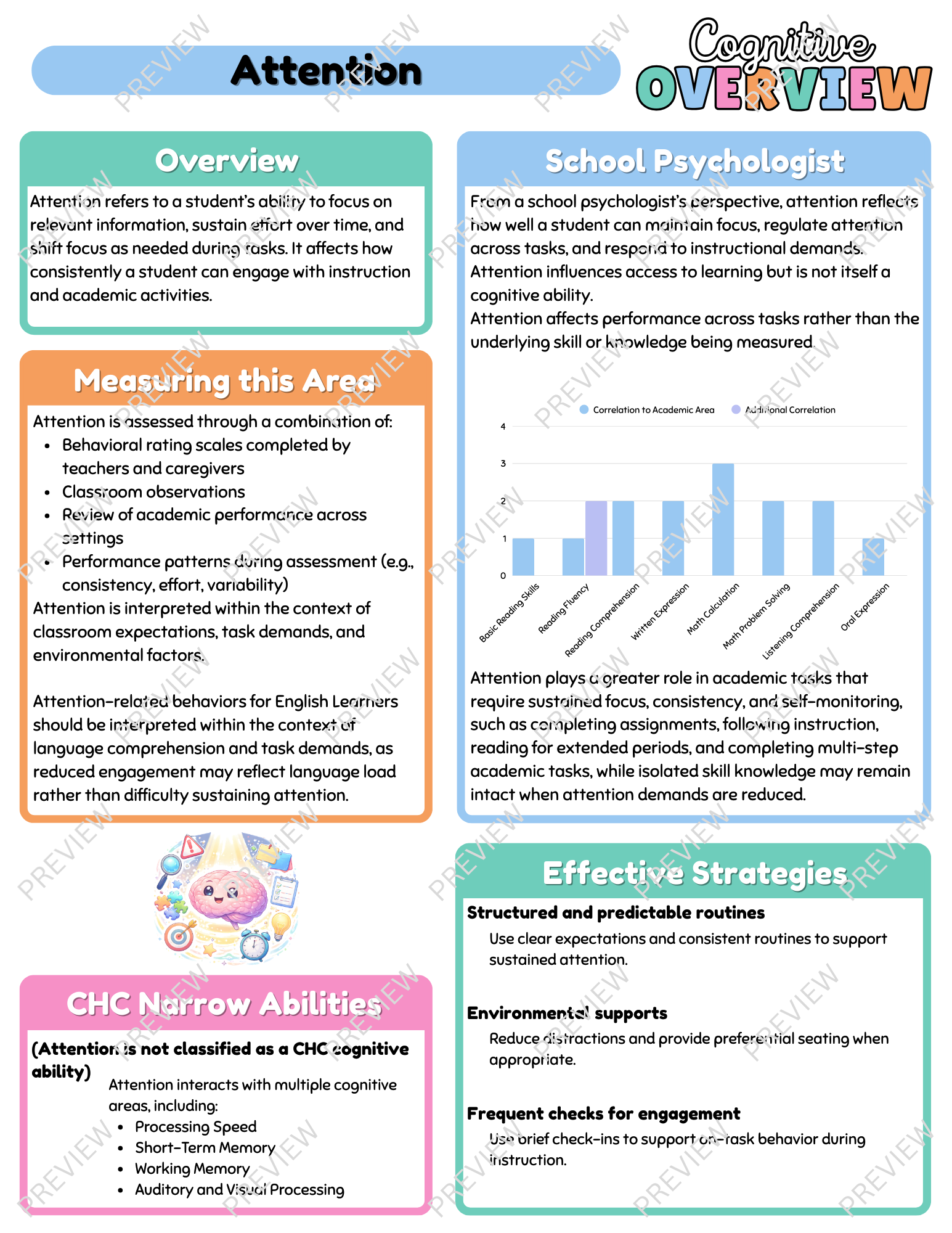 Image 9 of 9